

Torahrism
Introduction
This article defines British Israelism:
British Israelism (also called Anglo-Israelism) is a pseudoarchaeological belief that the people of the British Isles are genetically, racially, and linguistically the direct descendants of the Ten Lost Tribes of ancient Israel. With roots in the 16th century, British Israelism was inspired by several 19th century English writings such as John Wilson’s 1840 Our Israelitish Origin. Numerous British Israelite organisations were set up throughout the British Empire as well as in the United States from the 1870s onwards; a number of these organisations are independently active as of the early 21st century. In America, the idea gave rise to the Christian Identity movement. The central tenets of British Israelism have been refuted by evidence from modern archaeological, ethnological, genetic, and linguistic research.
This one is about Hebrew Roots:
These [religious organizations] included Messianic Judaism (to a very limited degree) in 1916, the Sacred Name Movement (SNM) in 1937, and the Worldwide Church of God (WCG) in the 1930s, and, later, the Hebrew Roots Movement. Thus far, the WCG has had the greatest impact on all organizations which teach these beliefs, including obedience to much of the Old Testament law, both nationally and internationally until about 1994–95.
In contrast, Hebrew Roots (or sometimes, Hebraic Roots) is a grassroots movement without an ecclesiastical superstructure and it does not adhere to the COG belief system, nor does it adhere to Messianic Judaism, or to the SNM, although there are commonalities. A number of their founders began teaching about the need to keep the 7th Day Sabbath, to observe annual Feasts, and to obey Old Testament commandments years before these topics were taught and accepted by some in the Christian churches… Batya Wootten’s curiosity about the Gentile majority in many Messianic-Jewish congregations resulted in her first book about the two houses of Israel in 1988. This was later followed by her 1998 book entitled Who is Israel (now renamed in its 4th edition as Redeemed Israel).
The primary impetus for this modern movement named after the law of Moses (Torah) seems to have come from Batya Wootten’s book The Two Houses of Israel and the organization Torah Life Ministries. Another branch is known as the Ephraimite movement or Sons of Ephraim. While the modern movement I’ve dubbed Torahrism isn’t exactly British Israelism, it definitely came from it. Whenever the Bible speaks of Gentiles, it really means the alleged ten lost tribes of Israel, such that all people in the world who come to faith in God are thus shown to be Israelites. It is sometimes known as the Two House/Two Sticks theory. This teaches that in Ezekiel 37:16-28 the ten lost tribes (Judah and some Israelites) will be grafted into the two non-lost tribes (Joseph/Ephraim and some Israelites), and that the ten are really the Gentiles. What all these groups have in common is obedience to Torah and rejection of Christianity.
Analysis
One rebuttal to this can be found here. Notice that Ezekiel 37:28 mentions “the nations”, and later chapters in Ezekiel describe how these nations will bring tribute to Israel. This means that they’re still Gentiles rather than part of Israel or Judah. All the languge of this passage is about the twelve tribes descended from Jacob/Israel, not any Gentiles.
Eph. 2:11-21 clearly indicates that the two groups joined into one were Jews and Gentiles, not Israel and Judah or Israel and the church. It was Gentiles who were separated from Chist and excluded from Israel and Abraham’s promise. And the way these two were united was by voiding the law with its commands by means of the cross. None of this references Ezekiel’s “two sticks” prophecy.
Scripture also indicates that all twelve tribes were accounted for in the first century AD (Acts 26:7, James 1:1). When Jesus was presented at the temple, a prophet named Anna spoke of him, and she was from the allegedly lost tribe of Asher (Luke 2:36). The Bible itself never speaks of any tribes being lost or unrepresented, and it called the nation Israel in Jesus’ day (Mat. 2:20, 10:6, Mark 15:32, Luke 2:25, John 1:49, Acts 21:28, Heb. 8:8-10, Rev. 7:4). At Pentecost, Jews were in Jerusalem from all over the region, speaking many languages (Acts 2:5-11). They were all called Jews no matter where they lived. So the terms Jew and Israelite are used interchangeably throughout the New Testament.
The law of Moses cannot be obeyed without a temple and priestly class of Levi, including the necessity that the nation is agrarian and will bring crops and herds to sacrifice and to support the priests and poor. The sacrifice of animals was required (see Ex. 29:36, Lev. 4:31, 9:7, 14:19, 15:15, 17:11, Num. 15:25). Blood was required to consecrate things and people to the Lord (Leviticus 16:19, Hebrews 9:22). This law was being practiced in Jesus’ day but ended in 70 AD. No one interpreted Hosea 6:6 as an excuse to stop the sacrifices until after the Jews were scattered and the temple destroyed.
There are two separate new covenants, one with Israel and one with the church (chart and article). Jer. 31:31-34 specifies this for Israel’s new covenant:
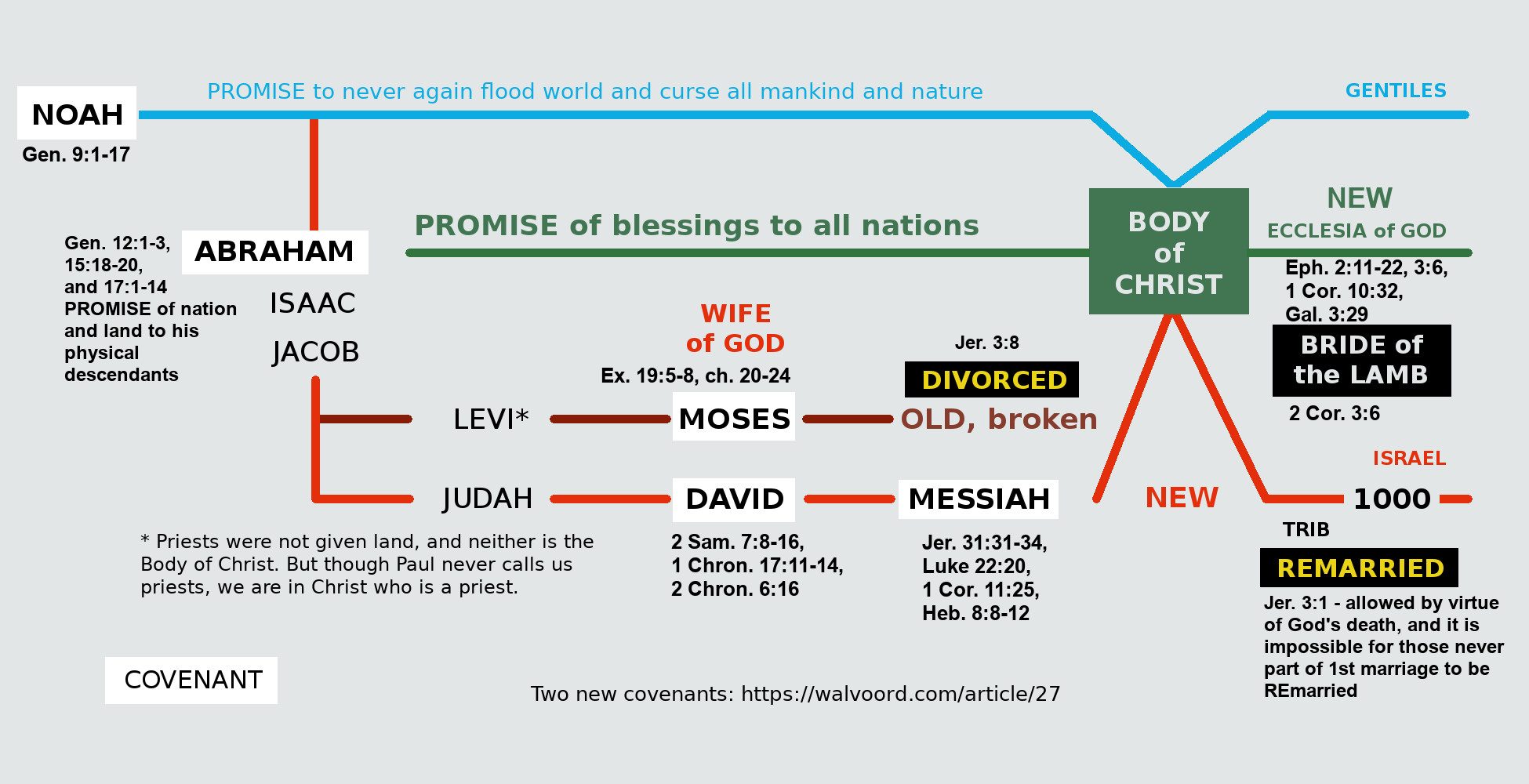
- It is to be with united Israel and Judah.
- It is contrasted with the Mosaic covenant, which also was with Israel only and not with any other people.
- It will be fulfilled after the days of judgment and affliction described in the preceding context.
- The Law is to be written in their hearts, in contrast to the Mosaic law which was written in tables of stone.
- YHWH will be their God and Israel will be His people; this relationship will be mutually and publicly recognized by both parties.
- There will be no need to proclaim the truth concerning YHWH since everyone will know Him.
- Their sins will be forgiven and forgotten.
- It is everlasting.
- Israel’s physical progeny will be known by the rest of the world (ergo not Israel) as blessed by God.
- Abrahamic
- Luke 1:72 the holy cov. with our ancestors
- Acts 3:25,7:8 heirs of the prophets and the cov. with our ancestors
- Gal. 3:17,4:24-28 the late-coming law does not negate the promise
- Heb. 8:7-13 the new cov. w/Israel is not like old one
- Mosaic
- 2 Cor. 3:14 the veil when the old cov. is read is removed only in Christ
- Heb. 9:15 Christ mediates the new cov. of promise
- Heb. 9:20 the old cov. was between God and Israel
- General
- Rom. 9:4 Israel had the covenants
- Eph. 2:12 Gentiles were excluded from Israel and the Promise
- New by context
- Mat. 26:28, Mark 14:24 Jesus signed the new cov. in his blood
- Rom. 11:27 Israel and Gentiles are saved via the new cov.
- Heb. 8:8-12 quotes Jer. 31:31-34 and is the only reference to the new cov. pertaining to Israel
Isaiah 61:8-9 is even more specific about the new covenant:
Jer. 32:37,41 states that the new covenant is conditioned upon Israel’s return from exile, and that they will be restablished in their ancient land. None of this pertains to the church, and the modern state of Israel is filled with unbelievers, which is required in order for remaining prophecies to be fulfilled. Now for references to covenants in the New Testament:
The name game
Characteristic of this anti-Christian sect is the issue of the so-called Sacred Name teaching. Though the ancient Hebrews went out of their way to avoid speaking or writing the proper name of God out of a respectful fear of misusing it, this teaching insists upon doing exactly the opposite. But the precise spelling and pronunciation of this name has changed often, such that if someone came to faith using whatever is currently deemed improper, they must confess again for salvation. Yet this is all easily debunked by reading the Israelite-approved Greek scriptures translated before the time of Christ, the Septuagint. It used only two names for deity: Theos (God) and Kurios (Lord), regardless of the variety of Hebrew names. This proves that it was the meaning, not the syllables, that mattered most.
But the greater error is that Torahrism changes the meaning of the New Testament word “faith” from trust and confidence in the risen Jesus to “faithfulness to the law”. That is, Jesus came not to fulfill the law on behalf of others but to show us how to perfectly obey it. Though this would make his sacrifice for sin pointless since sacrifices were already central to that law, Torahrism uses it as the reason they no longer need the sacrificial system— yet somehow the keeping of feasts and holy days must continue.
Another claim is that in Mark 7:19 Jesus wasn’t saying that all foods were now clean (kosher), but that in the process of elimination all food is cleansed. This is ridiculous; digestion does not clean food. What’s eliminated is waste, not clean food.
Yet another attempt to twist scripture is that whatever the New Testament says in criticism of the law, it either means the Talmud (traditions) or only the penalty of the law. Yet Gal. 4:4 says that Jesus was born under law, which would mean he was born under its penalty, which in turn would mean that he was guilty of breaking it. The fact that he never broke it refutes this claim. And if, as some may say, we’re only under the law if we break it, then Jesus could not have been born under it. This claim hopelessly contradicts scripture, not to mention the fact that being under law is a statement of obligation, which could not be sinful in itself since Jesus was under it.
All of these claims completely ignore Heb. 7:11-19, which states that the law and its priesthood stay or go together. But though some insist that Christians are antinomians (lawless), we are under the Law of Christ (Gal. 6:2), which is to love God and people, to show compassion and be of help. This essentially encompasses the two greatest commandments of Torah (Mat. 22:36-40)— only this and nothing more, since love fulfills the law (Rom. 13:8-10, Gal. 5:14). Here is a list of passages showing the limitation and end of the law in favor of grace:
| Mat. 5:17 | Jesus fulfilled law |
| John 1:17 | law came from Moses, but grace & truth came from Jesus Christ |
| John 6:28-29 | the work God requires is to believe in the One he sent |
| Acts 15:10-11 | salvation is only by faith, not the burden of the law |
| Rom. 3:19-31 | what law says is to those under it; its purpose is to expose sin, not justify anyone |
| Rom. 3:27,4:1-5 | The law we uphold is the law of faith |
| Rom. 6:14-15 | not under law but under grace, not a license to sin |
| Rom. 7:1-6 | we died to the law and now belong to Jesus |
| Rom. 8:2-3 | law of sin and death is the law of Moses |
| Rom. 8:15,23 | Christians adopted by God through faith in Jesus |
| Rom. 14:5-6 | sacred days are a matter of personal conviction, not law |
| Rom. 14:10-17 | kingdom not about food/drink but justice, peace |
| Rom. 14:19-22 | don't judge personal convictions, but be considerate |
| Rom. 14:23 | whatever is not from faith is sin |
| 1 Cor. 9:20-21 | not under the law of Moses but of Christ |
| 1 Cor. 15:56 | sting of death is sin, power of sin is THE law |
| 2 Cor. 5:10 | Bema of Christ to give/take Christians rewards |
| Gal. 2:9 | Paul accepted by Peter, James, and John |
| Gal. 2:14 | Paul rebuked Peter for making Gentiles observe Judaism |
| Gal. 2:21 | righteousness by grace not law, or Jesus died for nothing |
| Gal. 3:19-29 | law was temporary guide, didn't negate the Promise |
| Gal. 4:5 | Christians adopted by God through faith in Jesus |
| Gal. 4:8-11 | no need to observe sacred days, months, years |
| Gal. 4:21-23 | heirs of promise, not law |
| Gal. 5:1-12 | justification by law = fallen away from grace |
| Gal. 5:14 | we have the blessings of Abraham (not Jacob/Israel) |
| Gal. 6:2 | we are under the Law of Christ, love and compassion |
| Eph. 2:8-10 | saved by grace, not works which are for rewards |
| Phil. 3:9 | not our own righteousness but only in Jesus through faith |
| Col. 2:8 | Christ, not philosophy and tradition |
| Col. 2:16 | no judging about food, drink, festivals, moons, or sabbaths |
| Heb. 7:12-13 | a change of priesthood requires a change of law |
| Heb. 8:13 | the old law was fading away |
| Heb. 10:1 | law is only shadow, not reality |
| Rev. 2:9, 3:9 | those who say they're Jews but aren’t |
The Torah became flesh?
Perhaps the most bizarre teaching associated with some Torahrists is the kabbalistic belief that the Torah is a living entity which literally became tangible in the form of Jesus. This of course makes Jesus a created being and lesser expression of God; they reduce him to a talking book. Thus, to follow Jesus really means to follow Torah. But extreme as this view is, all degrees of Torahrism boil down to a degrading of Jesus in some way, but above all that he only came to bring the world into Torah observance.
Conclusion
Torahrism essentially teaches that whoever is not of the bloodline of Jacob/Israel can never be saved. But it’s circular reasoning to claim that if someone comes to faith in the God of Israel it proves they were of the alleged lost tribes and just didn’t know it. And then they’re obligated to obey everything written in the law of Moses— well, except for the parts that require a temple, priesthood, and sacrifices, or to bring offerings of crops and animals, or to forgive debts and return land to original owners in Jubilee years. In addition to keeping festivals and holy days such as the Sabbath, one must also renounce the so-called pagan names of God and Jesus for whatever Hebrew words are deemed most accurate at the moment, as well as the English names for months and days.
In a nutshell, Torahrism is a religion of works like any other, and it seeks to eliminate Christianity. It is both racist and fatalistic. It directly renounces salvation as a gift received by faith alone in the risen Jesus alone. Never does God tell Christians to show their love by obeying Moses. Much of the New Testament was written in refutation of what it calls Judaizers, and the apostle Paul was persecuted and eventually martyred for opposing and exposing them. We must be diligent to continue exposing this false teaching which is deceiving many who don’t know the Bible well.